
Occupational Therapy
To promote autonomy, participation, and quality of life.
Occupational Therapy is a health profession that promotes autonomy, independence, and quality of life for people throughout all stages of life.
The occupational therapist intervenes when there are difficulties that limit participation in daily activities, helping each person to perform activities that are meaningful to them in a more functional, autonomous, and satisfying way, at home, at school, at work, and in the community.
At Serennia, we develop an individualized and person-centered intervention, seeking to understand their needs, abilities, and goals, using therapeutic activities as the main tool for assessment and intervention.
We work with babies, children, adolescents, adults, and the elderly, promoting autonomy, functionality, occupational participation, and quality of life.
Occupational Therapy with a Sensory Integration approach
Sensory Integration is a specialized approach within Occupational Therapy that aims to promote better organization and processing of sensory information by the brain, fostering more adaptive responses in daily activities.
At Serennia, this approach integrates Occupational Therapy intervention whenever, after individualized assessment, it proves to be the most appropriate response to the child's needs.
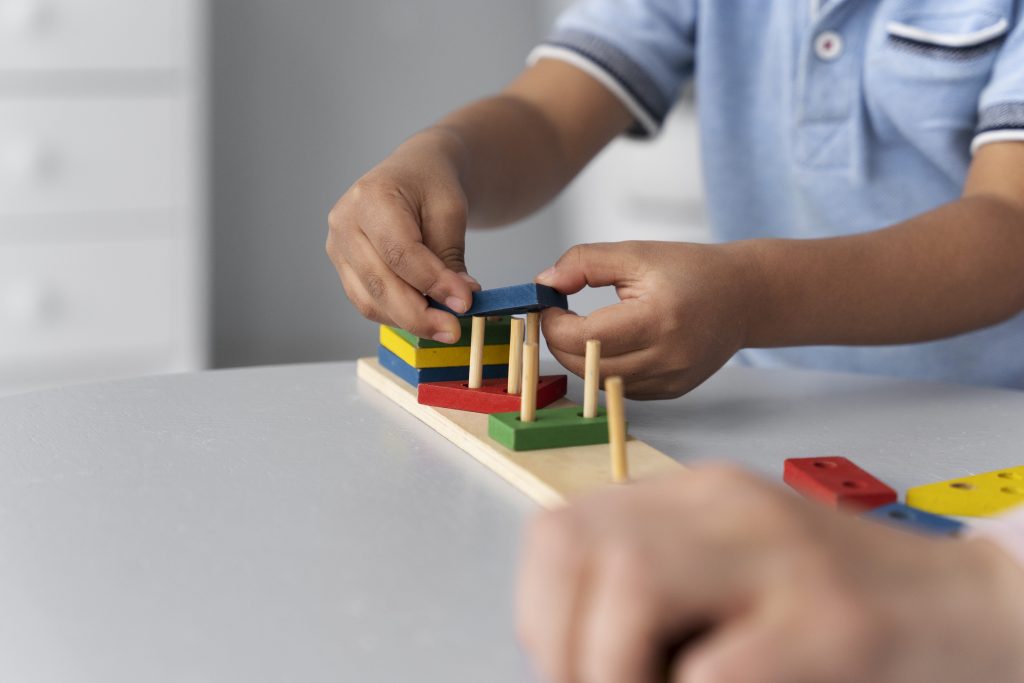
The intervention takes place in a therapeutic environment prepared for this purpose, using therapeutic equipment and specific materials that stimulate, in a playful, motivating and carefully structured way, the vestibular, proprioceptive and tactile systems.
These sensory experiences are carefully planned to promote self-regulation, motor coordination, attention, participation in activities of daily living, and the child's autonomy.
The main objective is to increase the child's participation in their daily routines, at home, at school, and in different social contexts, contributing to their development, well-being, and quality of life.
Occupational therapy can also be integrated into early intervention programs, promoting the child's overall development in close collaboration with the family and other professionals.
How can we help you?
How does the consultation take place?
The follow-up begins with an individualized assessment, seeking to understand each person's skills, difficulties, needs, and goals.
Based on this assessment, a personalized intervention plan is defined, using meaningful therapeutic activities and strategies adapted to the identified needs.
Whenever appropriate, different therapeutic approaches, including Sensory Integration, can be integrated according to the goals defined for each person.
Whenever this articulation benefits the follow-up, the intervention may be developed in collaboration with other areas.
Frequently Asked Questions
What is Occupational Therapy?
Occupational Therapy is a health profession that promotes autonomy, independence, and participation in meaningful activities of daily living, contributing to a better quality of life at all stages of life.
Is Occupational Therapy only for children?
No. It works with babies, children, teenagers, adults, and the elderly, adapting the intervention to the specific needs of each person.
What is Sensory Integration?
It is a specialized approach within Occupational Therapy used when there are difficulties in how the brain receives, organizes, and interprets information from different sensory systems. These difficulties can influence learning, behavior, autonomy, and participation in daily activities.
Can Occupational Therapy be integrated with other areas?
Yes. Whenever this collaboration benefits the follow-up, Occupational Therapy can be developed in conjunction with other specialties, providing an integrated, personalized, and person-centered response.


